 ®
Technical guide
How to select a gearbox for stacker-reclaimers, ship-loaders and bulk-yard equipment
Author: HUIGUANG × CHENGFA Transmission Technical Team · Updated: 2026-10-14
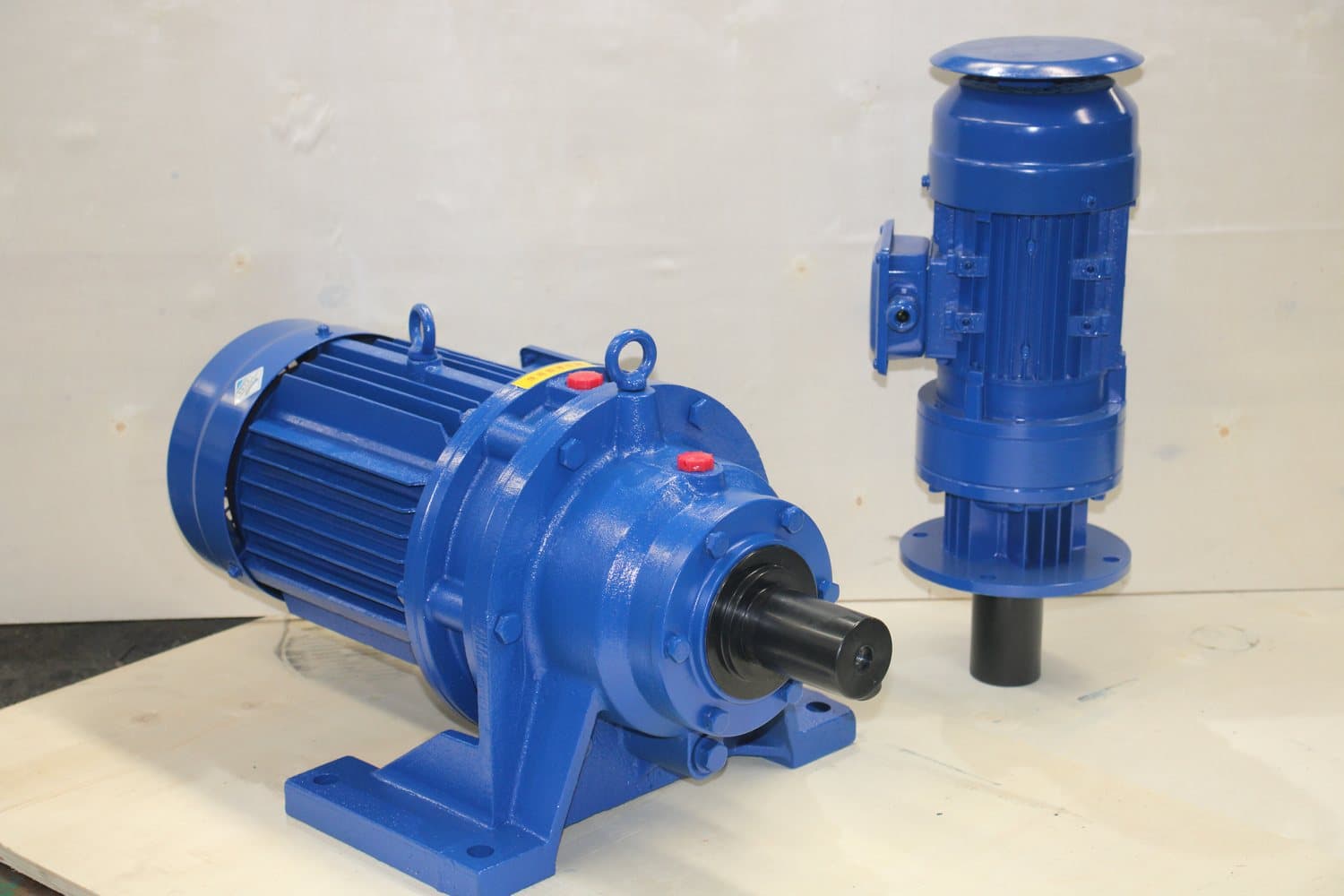
Stacker-reclaimers are the workhorses of any coal, iron-ore, bauxite, fertilizer, clinker, grain or salt stockyard. On the same steel structure they combine slewing, luffing, traveling, and on reclaimers also bucket-wheel reclaiming motions, all of them powered by electric motors through industrial gearboxes. For an OEM that builds the machine, or for a system integrator that assembles the boom, slewing table, gantry and bucket-wheel boom, the gearbox selection determines the duty cycle the stacker-reclaimer can actually deliver, the payload the slewing bearing can absorb, and the long-term maintenance interval the end user will see. The same engineering logic applies to bucket-wheel reclaimers, ship-loaders and ship-unloaders, and any other bulk-yard handling equipment that lives outdoors, under dust and tropical sun, for twenty years or more.
This guide walks through the motion set, the typical gearbox families that fit each motion, the derating logic for outdoor dust and marine service, and the OEM customization, document and spare-parts package that HUIGUANG × CHENGFA Transmission delivers for stacker-reclaimer projects. It is written for the design engineer in the OEM office and for the procurement engineer who has to compare offers, not for the end user operating the machine.
Motion subsystems and their duty cycles
A modern stacker-reclaimer has four to five independent motions, each driven by its own motor-gearbox set: slewing of the entire boom around the central column; luffing of the boom up and down to set the stockpile height; traveling of the whole machine on rails or on crawlers; and on a reclaimer, the bucket-wheel rotation and the bucket-wheel boom travel or slewing. A ship-loader adds a counterweighted luffing boom and a shuttle or telescopic belt travel; a ship-unloader adds a luffing and slewing pendulum. The slew, luff and bucket-wheel motions are normally classified as Class IV or Class V mechanisms under bulk-material-handling standards, which corresponds to service factors of roughly 2.0 to 3.0 when expressed on the gearbox output. Class IV machines run 12 to 16 hours per day with hundreds of starts and stops per shift; Class V machines are continuous two- or three-shift operations with peak torques during stockpile cut-in.
For the OEM, the practical consequence is that gearboxes for slewing and luffing are sized by peak torque and by thermal capacity, not by nominal motor power. Slewing peak torque comes from wind on the boom, slewing bearing friction and inertia during acceleration; luffing peak torque comes from the boom weight, the payload of coal or ore resting on the belt, and the slewing moment arm when the boom is extended. Bucket-wheel peak torque comes from cutting into the stockpile face, including tramp iron, compacted layers and slabbing. The detailed input list the supplier will ask for is summarized in the related guide Industrial Gearbox Selection Inputs.
Slewing drives (planetary, helical-bevel, worm)
Slewing is the defining motion of any stacker-reclaimer. Output speeds are very low, typically 0.05 to 0.5 rpm, ratios of 30:1 to 250:1 are common, and output torques of 1 000 to 20 000 kNm are reached on large circular-stackers and bridge-type reclaimers. Three gearbox families compete in this slot: P-series planetary units with a hollow output shaft and shrink-disc connection to the slewing bearing pinion, helical-bevel (K/F) units with a foot-mounted or flange-mounted solid shaft, and worm units for smaller machines where self-locking is welcome.
For the OEM, P-series planetary units are usually the first choice because the high torque density keeps the gearbox package compact under the slewing platform, the hollow-shaft-with-shrink-disc interface bolts directly onto the slewing bearing pinion without a coupling alignment problem, and the modular input stage accepts standard IEC or NEMA motor adapters from 5 to 315 kW. K/F helical-bevel units are preferred when the pinion is integrated into the gearbox output stage, when an integrated hydraulic brake and backstop is required on the same shaft, or when the OEM wants a right-angle layout that fits a tight plinth. Worm units still appear on small slewing machines where the natural self-locking characteristic acts as an additional safety brake against wind-induced back-driving, but the efficiency loss means a larger motor and a longer thermal-rating review. The performance baseline for the planetary range is described in the related guide P-Series Planetary Gearbox Overview.
Three practical interfaces deserve attention when specifying a slewing drive. First, the shrink-disc connection: the OEM must give the pinion shaft diameter, the pinion material, the shrink-disc make and the torque-transmission friction coefficient expected at the operating temperature, because torque is transmitted by friction and the choice of shrink-disc fit affects both peak and holding torque. Second, the brake interface: most slewing drives use a hydraulic fail-safe spring-applied brake mounted on a motor-side or intermediate-shaft brake flange, with a hand-release and a wear-indicator; the brake torque must be sized to hold the boom against the maximum design wind with the slewing motor de-energized. Third, the backstop: a backstop integrated in the gearbox prevents the boom from slewing back under wind when the drive is stopped and acts as a redundant safety device; for Class IV and V machines a backstop is normally mandatory.
Luffing winch and hoisting drives
Luffing raises and lowers the boom so the discharge or the bucket-wheel can build or reclaim at different stockpile heights. The luffing winch is a wire-rope drum driven through a gearbox from an electric motor; on the largest machines a hydraulic motor replaces the electric one for smoother inching. Output speeds are 0.5 to 5 rpm, ratios of 30:1 to 160:1 are typical, motor powers of 15 to 250 kW, and the gearbox absorbs both the steady hoisting torque and the dynamic shock when the boom is stopped or accelerated.
K/F helical-bevel gear units are the default choice for luffing because the right-angle layout simplifies the drum-to-gearbox arrangement and the helical gearing handles the bidirectional torque reversals of hoisting without wear issues. The gearbox is mounted on a sub-frame under the boom pivot, with a foot or flange mounting; the output shaft connects to the drum through a gear coupling or a drum-mounted pinion, and a hydraulic fail-safe brake is mounted on an intermediate shaft so that power-off braking holds the boom in position. The related reference R, F, K and S Series Geared Motor Differences covers how the four helical families differ in gearset arrangement, oil capacity and brake interface.
Two engineering details are usually under-specified. First, the luffing cycle must be classified properly: a stockpile stacker typically cycles 100 to 400 times per shift, so even with a moderate peak torque the thermal rating of the gearbox governs the design. Second, luffing gearboxes see significant axial thrust from the wire-rope pull on the drum bearing; the OEM should specify the radial and axial load on the output shaft so the bearing arrangement can be checked. P-series planetary units are occasionally used for very compact luffing winches or when the luffing gearbox has to share the slewing platform; the helical-bevel remains the more common solution.
Travel drives and gantry travel wheels
Travel moves the entire machine along the yard, either on rails via flanged travel wheels or on crawlers via hydraulic final drives. On rail-mounted stackers and bridge reclaimers, two or four travel drives run synchronously, each driven by a motor-gearbox set mounted on a common shaft that drives both wheels of a bogie through a third stage; on crawler-mounted machines each track has its own hydraulic final drive. Travel speeds are typically 5 to 30 m/min, motor powers of 7.5 to 110 kW, and ratios of 20:1 to 120:1.
K/F helical-bevel gear units are again the workhorse here, mounted in foot or flange position with a hollow-shaft-with-shrinking-disc connection to the travel-wheel shaft or to a universal-joint intermediate shaft. H/B series inline industrial gearboxes are used as the third stage on long-travel gantries where the distance between the bogie wheels makes a single right-angle unit less convenient. A hydraulic fail-safe parking brake is normally integrated into the gearbox or mounted on a brake disc on the travel-wheel shaft, with an electrical limit switch confirming brake release before travel is enabled. Mounting positions M1 to M6 are documented in the related guide Industrial Gearbox Mounting Positions M1 to M6 so the OEM can predefine the breather, oil-level and drain-plug orientation before installation.
On rail-mounted machines a synchronization control keeps both travel drives within a defined speed tolerance so the gantry does not skew; a speed-sensing encoder on each gearbox output is the usual feedback element. On crawler-mounted machines the OEM usually pairs the gearbox to a hydraulic motor and treats the gearbox as a final-reduction stage; in this case the service factor is reviewed against the crawler duty cycle rather than against motor thermal rating.
Bucket-wheel drive on reclaimers
Bucket-wheel reclaimers add a continuous-action cutting motion to the slewing and traveling set. The bucket wheel itself is a large ring of buckets that cut a stockpile face as the wheel rotates; the rotation is driven by one or two motors through a gearbox, and on large machines an intermediate shaft from the gearbox drives a pinion that engages an internal ring gear on the bucket-wheel structure. Motor powers of 75 to 600 kW, output speeds of 4 to 15 rpm, and ratios of 20:1 to 80:1 are typical.
Three families are used depending on size and layout. P-series planetary units give a very compact high-torque package for medium-size bucket wheels and are often mounted directly on the boom with a hollow-shaft-with-shrink-disc connection to the bucket-wheel shaft. Cycloidal (WB / XWD) reducers are commonly specified as an intermediate step between the motor and the planetary or helical-bevel final stage, especially when the bucket-wheel motor is in the 75 to 250 kW range and a single-stage planetary final drive would be oversize; the cycloidal stage absorbs shock loads from cutting into compacted layers. Helical-bevel K/F units are used for the final stage on very large bucket wheels where the gearbox has to be floor-mounted for service access. Where a non-standard speed ratio or a special output flange is required the gearbox is replaced with a customized transmission solution engineered against the bucket-wheel interface drawing.
Bucket-wheel drives experience the most aggressive shock loading on the entire stacker-reclaimer. Two practical consequences for the OEM: the gearbox must be sized on peak cutting torque, not nominal torque, and the mechanical connection to the bucket wheel must accommodate angular and axial misalignment from boom deflection. The fluid coupling or the torque-limiting coupling between motor and gearbox is the standard protection; hydraulic overload valves on the bucket-wheel hydraulic motor, when used, are set to clamp well below the gearbox peak torque rating.
Service factor, ambient, and derating
The gearbox service factor expresses how much harder the gearbox works than the motor nameplate suggests and is the single most important number in the OEM specification sheet. Slewing drives for Class IV and V stacker-reclaimers typically carry a service factor of 2.0 to 3.0 applied to the nominal motor torque; luffing and bucket-wheel drives commonly sit at 2.0 to 2.5; travel drives are usually 1.5 to 2.0. The full background is covered in the related guide How Service Factor Affects Gearbox Selection.
Derating enters when ambient temperature, altitude or outdoor exposure push the gearbox above its rated thermal capacity. Most gearbox ratings are published for an ambient of 20 °C and an altitude below 1 000 m; bulk-yard machines operate from 0 to 55 °C, in direct sun, sometimes at altitudes of 1 500 to 3 000 m. Practical derating on a P-series planetary slewing drive, expressed in output torque, can be roughly 10% per 10 °C above 40 °C ambient, with the assumption of a still-air enclosure; under forced-air or water-cooled oil systems the derating is reduced. Independent oil coolers, finned housings and synthetic lubricants that tolerate higher bulk-oil temperatures are all standard derating responses and should be agreed during selection, not installed as a field fix.
The derating also has a duty-cycle dimension: a gearbox that is sized for continuous two-shift bucket-wheel cutting cannot be installed on a one-shift stockpile without adjustment, because the thermal mass is different and the gear lubrication regime changes. The supplier should be given the operating hours per shift, starts per hour, peak-to-nominal torque ratio, and ambient temperature profile (not just the maximum). For OEM-engineered gearboxes a duty-cycle thermal check is part of the selection report; the OEM signs off the cycle and the supplier signs off the sizing.
Brake, backstop, and overload protection
Every slewing and luffing drive on a stacker-reclaimer has a fail-safe holding brake. The standard configuration is a hydraulic spring-applied, hydraulically-released disc brake mounted on a motor-side or intermediate-shaft brake flange, with a hand-release for maintenance and a wear-indicator feeding back to the control system. The brake torque is sized for the holding load at maximum design wind with the slewing motor de-energized, plus a safety factor that matches the local crane or bulk-handling code. Brake hydraulic power is normally drawn from a dedicated compact hydraulic power unit mounted next to the gearbox; for outdoor service the HPU carries an IP55 enclosure and an oil-temperature heater for cold-start.
Backstops are integrated into the gearbox to prevent reverse rotation under external loads. Slewing backstops block wind-induced back-driving when the boom is parked; luffing backstops block the boom from falling under gravity if the holding brake is released for maintenance. The backstop is selected to lift the rated output torque at the output speed range, with a free-wearing life that should be checked at every major inspection. Overload protection between the motor and the gearbox comes from a torque-limiting coupling, a fluid coupling with a controlled slip torque, or a hydraulic motor with a pressure-relief limit; the gearbox itself is normally rated to absorb momentary peak torques up to twice its nominal rating for short durations, but the supplier should confirm the exact peak number.
Oil seals and breather plugs are small parts that decide whether the gearbox survives its service interval. For outdoor tropical-marine service the seal arrangement is upgraded to a dual-lip seal with a dust excluder on the output shaft, and the breather plug is replaced by a desiccant breather or an extended breathing pipe that ends in a clean-air position; the oil drain and level plugs are sealed with bonded washers and the inspection cover is sealed with a continuous gasket. These items are part of the standard outdoor-enclosure scope and not optional extras.
Tropical-marine, dust, and outdoor enclosure
Stacker-reclaimers live outdoors, twenty-four hours a day, in environments that combine dust, humidity, salt spray and high ambient temperature. The gearbox enclosure must be designed for that exposure, not just for the catalog IP rating. Three layers of protection matter: the surface coating system, the sealing system, and the lubricant specification.
The surface coating system starts with a shot-blasted steel surface to SA 2.5, then a zinc-rich primer at 60 to 80 µm, an epoxy intermediate coat at 100 to 150 µm, and a polyurethane top coat at 40 to 60 µm; total dry-film thickness of 200 to 280 µm. For tropical-marine service the polyurethane top coat is replaced by a polysiloxane or a fluoropolymer top coat at 40 to 60 µm and the standard color is light gray or white to reduce solar heat gain. The coating system is specified per ISO 12944 corrosivity category C4 for coastal industrial and C5-M for offshore-marine; the OEM specifies the corrosivity category at enquiry and the supplier includes the matching coating certificate in the document package.
The sealing system starts with the IP55 or IP65 enclosure rating and extends to every shaft, cover and plug. For outdoor service IP55 with a dust-protected designation is the minimum; for dust-heavy yards (cement, clinker, alumina, fertilizer) IP65 is the default. The breather plug is upgraded to a desiccant type, the oil-level and drain plugs are upgraded to magnetic-type with sealed washers, and the inspection cover is sealed with a continuous gasket rather than a paper joint. The terminal box of any integrated motor has the same IP rating and a separate drain plug.
The lubricant specification for tropical service moves from mineral oil to a high-VI mineral or a PAO synthetic, with an upper bulk-oil temperature rating of 110 to 120 °C instead of the standard 90 to 95 °C; the oil volume, grade and fill-from-dry quantity are documented for first-fill at site. For cold-start below minus 10 °C a low-temperature synthetic or an oil heater is added to the gearbox scope. The full installation, lubrication and first-run sequence is described in the related guide Industrial Gearbox Installation, Lubrication and First-Run Checklist.
OEM customization, label, and document package
OEM customers building stacker-reclaimers usually need more than a catalog gearbox. The most common customizations are a non-standard shaft diameter or shrink-disc fit for a particular slewing bearing pinion, a brake flange sized to match the existing hydraulic brake, an integrated backstop, a special mounting orientation, a non-standard input adapter for a specific motor frame, and a special color or label. HUIGUANG × CHENGFA Transmission routinely delivers these customizations against an OEM drawing; the lead-time impact is typically two to four weeks versus catalog and is documented in the order confirmation.
Every OEM gearbox ships with a document package: nameplate, test certificate (no-load run, noise, vibration, oil-tightness, paint thickness), material certificates for gears and shafts, dimensional inspection report, installation drawing, lubrication schedule, spare-parts list, and a CE / ISO 9001 / EAC declaration depending on the destination market. The OEM label is applied per the OEM customer specification and includes the OEM part number, the OEM serial number and the HUIGUANG × CHENGFA part number side by side; bar-coded or QR-coded labels are available on request. For EAC and Russian-CIS destinations the document package is extended with the EAC certificate and the Russian-language nameplate; for CE markets the Declaration of Conformity is signed against the Machinery Directive.
For container shipment, the gearboxes are wrapped in VCI film, bolted to a treated-wood base, strapped to the container wall and shipped with shock indicators and humidity indicators; desiccant bags are placed inside the VCI wrap. Larger planetary units that do not fit a 40 ft high-cube are shipped on flat-rack with the same protection; the OEM is given the shipping dimensions, the gross weight and the center-of-gravity drawing so the receiving crane can be planned.
Spare-parts and lifecycle support
A 20-year-life stacker-reclaimer consumes a predictable set of spare parts: input-stage and output-stage seals, breather plugs, brake gaskets and seals, oil filters, mounting bolts and a recommended set of bearings for the slewing and luffing gearboxes. The OEM is supplied with a per-batch spare-parts list at delivery; for fleet contracts a multi-year spare-parts schedule is agreed, with the supplier holding a buffer of critical parts in a regional warehouse. Standard HUIGUANG × CHENGFA spare-parts response is two to four weeks ex-works for non-stock parts and one to two weeks for stock parts, depending on the destination; airfreight can be arranged for urgent line-stop situations.
Lifecycle support beyond spare parts covers field service for commissioning, oil-sample analysis on a six-month or yearly interval, gearbox-rebuild exchange programs for units that have reached their design life, and on-site training of the end user maintenance team. For OEM-engineered gearboxes, the engineering drawings and the FEM analysis report are retained by the supplier so that a like-for-like replacement gearbox can be built twenty years later without re-engineering. The combined effect for the OEM is a single accountable point of contact across the life of the machine, instead of three or four suppliers each carrying part of the scope.
Enquiry checklist for stacker-reclaimers
An OEM-ready enquiry should include the following items: machine type (stacker, reclaimer, bucket-wheel reclaimer, ship-loader, ship-unloader), motion positions that need a gearbox, motor power and speed for each motion, target output speed or ratio, peak torque or load data from which peak torque can be calculated, duty cycle including starts per hour and operating hours per shift, mounting form and orientation, output-shaft interface (solid shaft, hollow shaft with shrink disc, flange), brake and backstop requirements, ambient temperature range, dust and corrosion category, outdoor or indoor enclosure, applicable code or standard, quantity per batch and target delivery date. Existing engineering drawings, slewing-bearing pinion drawings, and any interface drawings should be attached; photographs of the existing machine are welcomed when the gearbox is for replacement work.
Send the enquiry to sales@chinfar.com with the subject line including the project name, machine type and quantity; a technical response confirming scope, selection logic and delivery schedule is normally returned within three to five working days. Detailed technical data is available after model and operating conditions are confirmed.
HUIGUANG × CHENGFA joint manufacturing covers industrial gearboxes, planetary units, helical-bevel gear units, cycloidal reducers, modular geared motors, and non-standard drive solutions for stackers and reclaimers, bucket-wheel reclaimers, ship-loaders, ship-unloaders and bulk-yard handling equipment. The scope is matched to OEM engineering drawings and is delivered with the document, label and spare-parts package described above.