 ®
®Plastic Extrusion
High-torque, continuous-duty drive solutions for single-screw and twin-screw plastic and rubber extrusion lines.
Common drive tasks
- Single-screw extrusion drive
- Twin-screw extrusion (engineered)
- High torque at low output speed
- Thrust load handling
Common risks and concerns
- Continuous operation thermal stability
- Axial thrust from screw backpressure
- Replacement matching for existing machines
Recommended product types
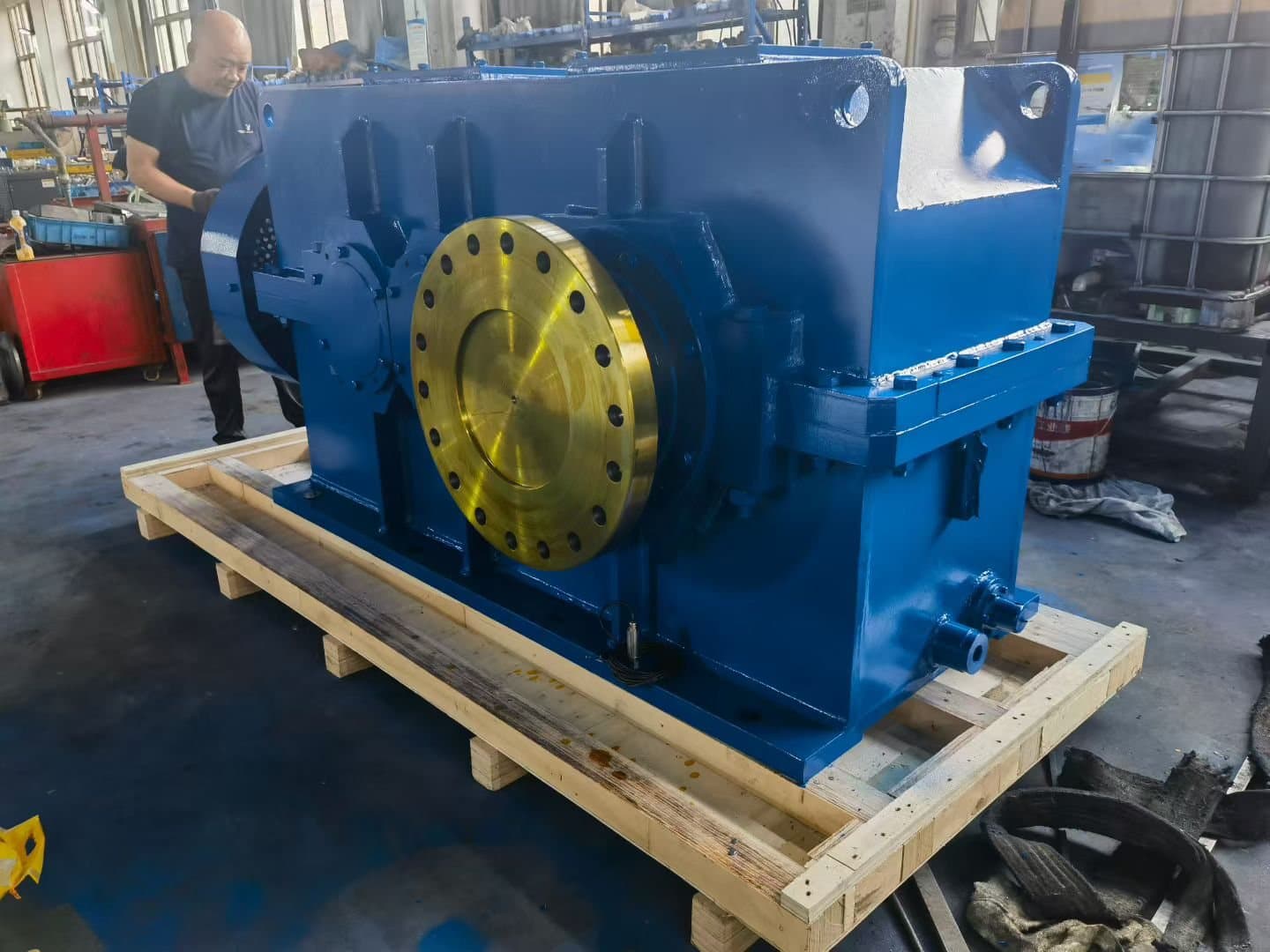
Industrial Gearboxes
HB series heavy-duty industrial gearboxes with parallel and right-angle variants, plus DCY bevel-cylindrical reducers for conveyor and heavy drives.
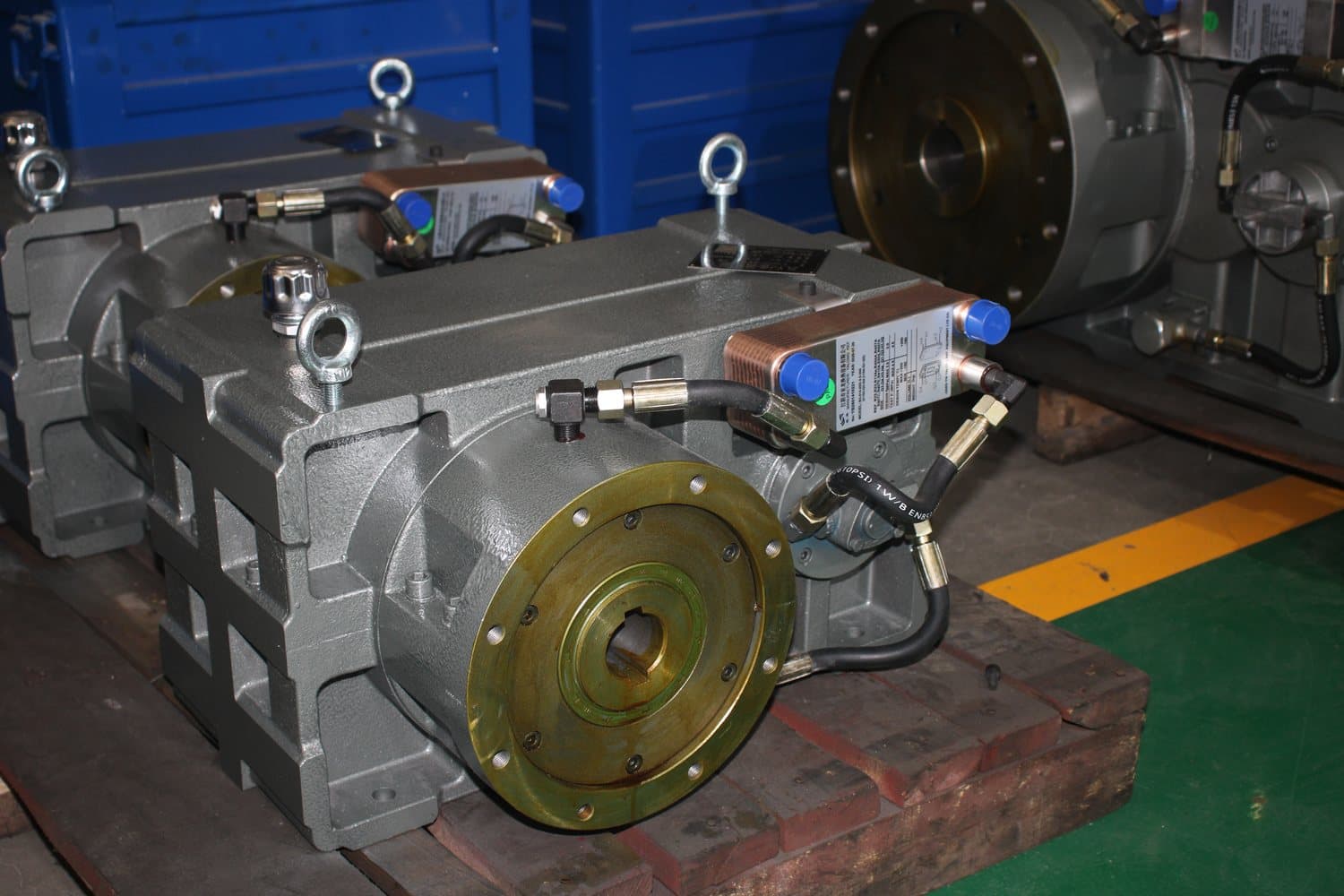
Extruder Gearboxes
Extruder gearbox solutions for plastic and rubber processing, covering ZLYJ and ZSYJ single-screw drives plus parallel and conical twin-screw configurations.
Selection factors
- Screw diameter and speed
- Motor power and torque demand
- Thrust bearing configuration
- Hourly duty cycle
- Existing mounting interface
Typical application points
- Single-screw extruders
- Rubber extruders
- Extrusion auxiliary drives
Customization available
- Thrust bearing options
- Special mounting and shaft ends
- Replacement engineering from drawings
Submit your operating conditions
Please provide equipment type, motor power, input speed, required output speed, torque, operating hours, mounting arrangement and medium conditions for a selection recommendation.
Submit operating conditionsFrequently Asked Questions — Plastic Extrusion
What gearbox fits a single-screw PVC pipe extrusion line?
A ZLYJ series hardened-tooth extruder gearbox is the standard choice for single-screw PVC pipe lines. Match the gearbox to the screw diameter (ZLYJ 133 / 173 / 200 / 225 / 250) and confirm the motor power, screw speed and axial thrust load during enquiry. For high-output PVC pressure-pipe lines above Ø250, a technical review is required.
Can a standard R/F/K/S modular geared motor be used for extruder auxiliaries (haul-off, cutter)?
Yes. R, F and S series modular geared motors are commonly used for extrusion line auxiliaries such as haul-off, cutter, calibration, and tipping tables. Selection is based on the auxiliary's power, speed, ratio and torque demand. For higher duty or precision speed holding, an inverter-matched configuration is recommended.