 ®
®Technical guide
Gearbox Noise and Vibration: How to Read the Symptom and Find the Cause
Author: HUIGUANG × CHENGFA Transmission Technical Team · Updated: 2026-09-11
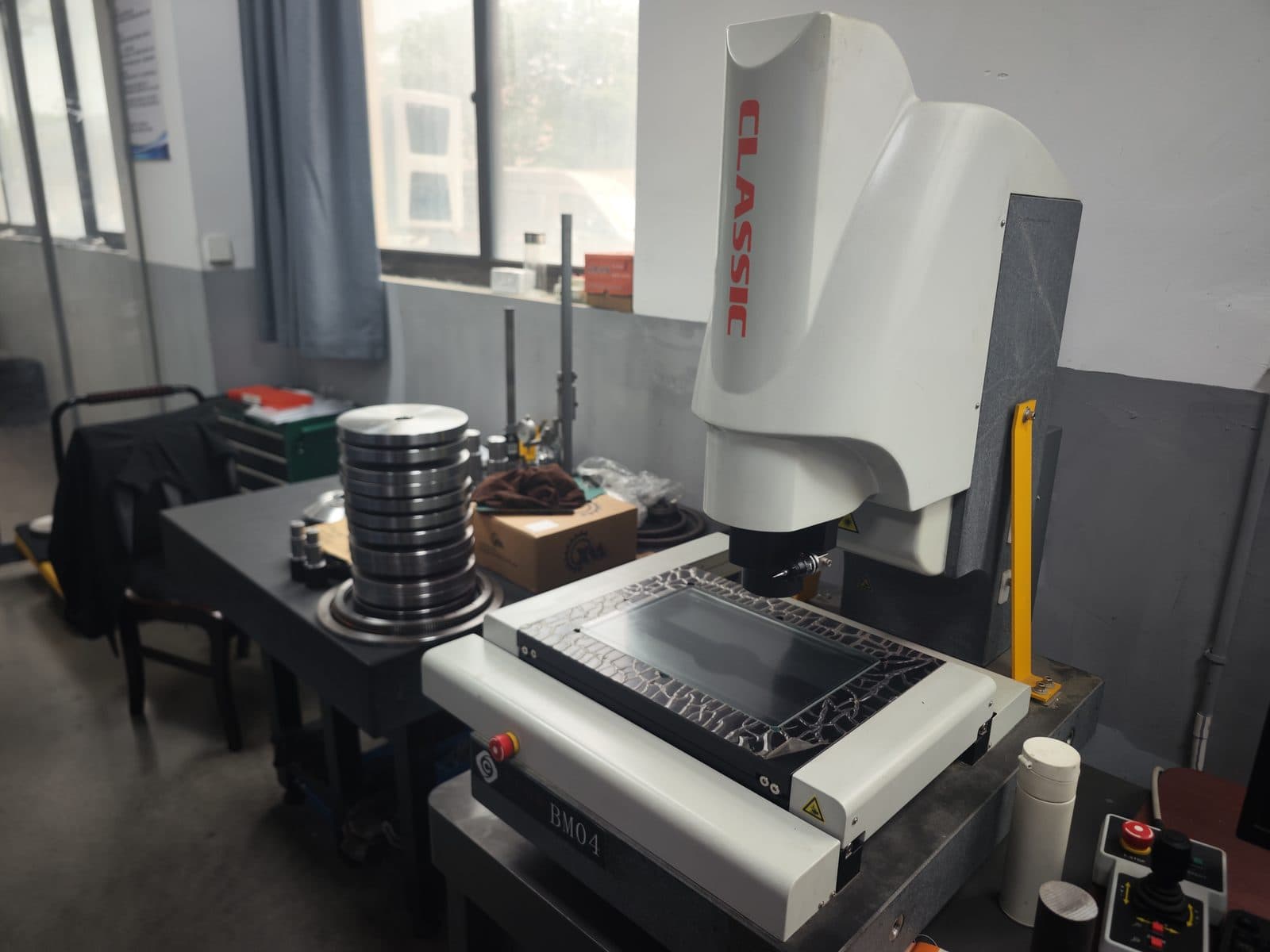
Gearbox noise and vibration are the symptoms operators notice first, but the cause is usually not in the gearbox itself. The symptom pattern — frequency, periodicity, load dependence and timing — points to a small set of likely root causes, and most can be confirmed without removing the unit from the baseplate.
Read the symptom pattern first
Three questions narrow the diagnosis before any tools come out: Is the noise constant or does it vary with load? Is it periodic (once per shaft revolution) or broadband (a hum or whine)? Does it appear only after warm-up, only at start-up, or all the time?
- Constant broadband hum that does not change with load: typically bearing noise or motor coupling misalignment. Check coupling alignment and bearing condition before looking further.
- Whining that rises with speed: gear mesh noise, often tied to oil viscosity or tooth surface wear. Confirm oil type and viscosity, and inspect for spalling or ridging on accessible gear teeth.
- Knocking or clicking once per shaft revolution: a broken tooth, a keyseat, a coupling bolt or a loose mounting bolt. The periodicity is the strongest single diagnostic signal.
- Grinding or rumbling that appears only under load: usually gear-tooth distress, often from under-lubrication or overload. Stop the unit and inspect before the damage propagates to adjacent teeth.
- Squealing at start-up only: cold oil too viscous for splash lubrication. Switch to a lower-viscosity winter grade or install a sump heater.
Where vibration measurement helps
Hand-feel on the casing is rarely diagnostic. A handheld vibration pen or accelerometer on the bearing housing gives a frequency spectrum that distinguishes imbalance (1× shaft speed), misalignment (2× shaft speed), gear mesh (gear-tooth count × shaft speed), and bearing defects (high-frequency random vibration with impact spikes). The spectrum tells you where to look; the time-domain waveform tells you the severity.
Common root causes ranked by frequency
- Loose mounting bolts or soft foot: this is the single most common vibration source and the cheapest to fix. Re-torque and re-shim before doing anything else.
- Coupling misalignment: parallel or angular misalignment creates vibration at 1× and 2× shaft speed. Re-align with a dial indicator or laser tool to within the coupling manufacturer's tolerance.
- Oil level or condition: low oil causes gear-mesh whine; degraded oil causes a broader hum and accelerated wear. Check oil level and colour on a warm unit before further diagnosis.
- Bearing wear or brinelling: presents as high-frequency random vibration with occasional impact spikes. Bearing replacement is required; do not run the unit to failure.
- Gear tooth wear or damage: spalling, ridging, or broken teeth present as periodic impacts at shaft speed. The unit must be opened and inspected.
What to record before calling the factory
Capture the symptom pattern (the three questions above), the oil condition, the vibration spectrum if measured, the operating hours since last oil change, and any recent changes to load, alignment or duty cycle. The factory support team can usually narrow the cause from these five items alone.
For persistent noise or vibration symptoms that the standard checks do not resolve, send the symptom description, vibration data and operating history to sales@chinfar.com.